Accepting Payments as an African Business
"A guide to understanding payment methods for businesses in Africa"
Over the years, Africa has evolved in terms of payments and how businesses accept payments in exchange for the value they create for their customers.
In this article, I will try to break down a few payment instruments and how they work. The goal is to aid businesses to make informed decisions as to how they operate in terms of receiving money for the value they create.
Payment Methods Overview
- •
USSD
Unstructured Supplementary Service Data, the cheapest and most accessible means of making electronic payments
- •
Cards
Examples include Verve, Mastercard, Visa - the most widely adopted payment method globally
- •
POS
Works with cards for physical locations and now serves as a 'Bank' for the unbanked
- •
Instant Transfers
Using Nigeria as a case study, networks built by NIBSS & Interswitch enable fast and seamless P2P transfers
USSD - Unstructured Supplementary Service Data
Businesses today can accept payments seamlessly leveraging USSD payment channels. The good thing is SMEs/MSMEs do not need to own or build the technology that powers this service. However, businesses can subscribe to these services provided by trusted financial service partners E.g Interswitch *723#, Qrios, etc.
For a typical business, all they need do to accept USSD payments is either one of two things: set up with a preferred service partner on how they want to collect payments or ask the provider to build the capacity for their business to accept payments leveraging their technology.
What do you need to have to set up? Well, you need to have a website where the service calls (Please read my article on APIs to understand the different types of API calls) for each transaction to be completed.
However, if you do not have one, then your chosen provider could build you a USSD string with your requirements, these may include:
- The type of payments you will like to collect
- Your settlement bank, where your profit goes to
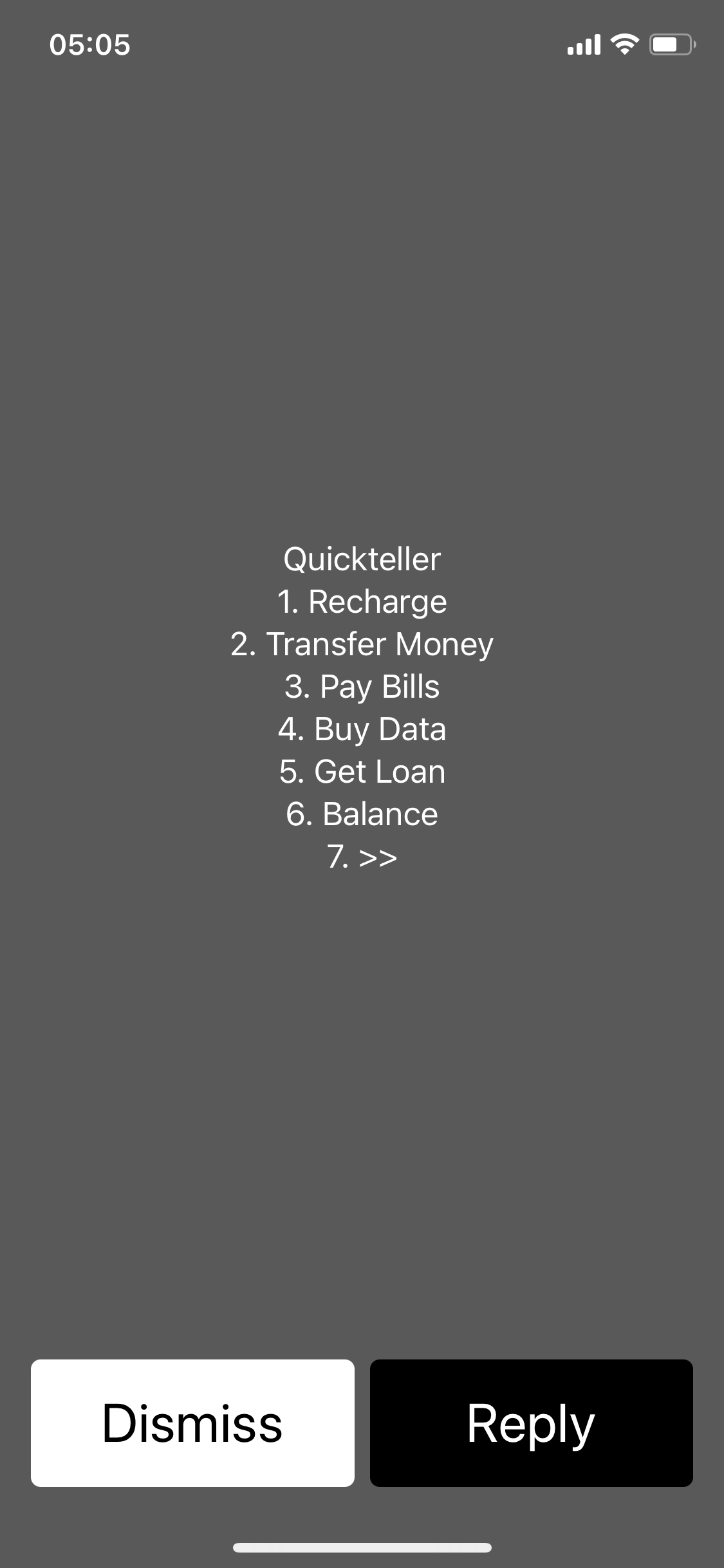
An example of this string would be *723*12# or *723*42#, it could be any number convention depending on what options are available. The first part 723 speaks to the service you are leveraging for your payment (in this instance I used Interswitch's 723 services, which could also be called Quickteller 723 service) and the second is yours, mostly called a subcode.
A typical example is *723# i.e Quickteller (*723#) is for making various types of payments leveraging the Quickteller service. However, a menu like the one shown in the image can be configured for any business that will like to collect payments via USSD.
Cards - Mastercard, Visa, and Verve
Simple examples of card providers are Mastercard, Visa, or the Nigerian brand Verve owned by Interswitch Group.
As Africans, we should take great pride in the feat Verve has achieved, gaining the largest chunk of the market share in Nigeria over Visa and Mastercard.
Cards are often used to complete web/online transactions, however how does this work?
For every card transaction, there is an acquirer, issuer, merchant, bank, aggregator - sometimes an acquirer and aggregator could be the same entity.
Key Players in Card Transactions
- •
Acquirer
The entity that accepts the transaction from the user (e.g., Paystack, a POS terminal, or an ATM)
- •
Merchant
The owner of the transaction or the entity collecting the payment
- •
Issuer
The card provider (Visa, Verve, Mastercard, etc.)
- •
Aggregator
Where transactions are passed to be completed (e.g., Interswitch in Nigeria)
- •
Bank
The entity that issues cards to its customers
This means as a user, your transaction on Paystack or Quickteller business (payment processor) goes to an aggregator like Interswitch to be completed and then comes back to your dashboard as a successful transaction. This may seem like a lot, however I assure you it all happens within those few seconds your browser loads or reloads after you must have entered card details and pin.
What this means is for every transaction done, every one of these entities gets paid an agreed amount.
POS - Point of Sale Devices
POS is primarily a device used at physical locations by businesses to accept payments. However, there are more use cases now like Agency banking but for the sake of the topic above, let's stick to how it is used as a method for accepting payments.
Reckon, I mentioned an Acquirer could be the aggregator as well, yes. For example, Interswitch is an African unicorn with various businesses positioned in different levels of the value chain of a card transaction or any electronic transaction hence could be the owner of a POS device, could own the card (Verve), also aggregate the transaction as the Interswitch payment gateway.
Interswitch has a merchant acquiring business called Quickteller business, this aids business owners to create websites or storefronts, collect payments, manage transactions, etc. for Free.
Instant Transfers - Powered by NIBSS and Interswitch
For every transfer done from a bank account to another, there is a middle man who facilitates this. The service or middleman is called "Transfer Service" primarily started by NIBSS. Along the way, Interswitch also came into this space, enabling instant transfers across all banks.
All settlements are typically done (T+1), which means your bank will receive settlement a day later. Essentially, all banks typically have accounts or positions with each other where money moves whenever a customer transaction triggers it, which is why you receive instant credit. The settlement happens later behind the scenes, and this speaks to how far we have gone in terms of our payment infrastructure in Nigeria.
This type of payment is widely adopted by various small businesses as it has less cost to the business. Customers tend to always want to use this method as well as it is also convenient for them. However, businesses must beware of bad actors and begin to adopt tools that mitigate these risks, like payment links. You can create these for free on Quickteller business, Prospa, Flutterwave, or Paystack.
Conclusion
Every business has its model, and its business plan captures a target market. Find a method of collecting payments that is simple & easy. As a merchant, it is also important to select what payment method is affordable and has low risk to your business efficiency, also mitigate the risk of doing business with bad actors.
Share this article
Related Articles

API Versioning: Best Practices for Sustainable Growth
Learn how to implement a versioning strategy that balances innovation with stability...
Read More
Building a Developer-First API Strategy
Discover the key elements that make APIs irresistible to developers...
Read More
Designing Internal Developer Platforms
Key considerations and implementation strategies for building platforms...
Read MoreSubscribe to My Newsletter
Get the latest articles, insights, and resources on fintech, payments, and business strategy delivered straight to your inbox.